
Sexual Harassment
Speak up and Be Heard: Sexual Harassment can happen to anyone, regardless of your gender or sexual orientation. Sexual Harassment should never be normalised, and we want to support you to speak up for yourself and be heard.
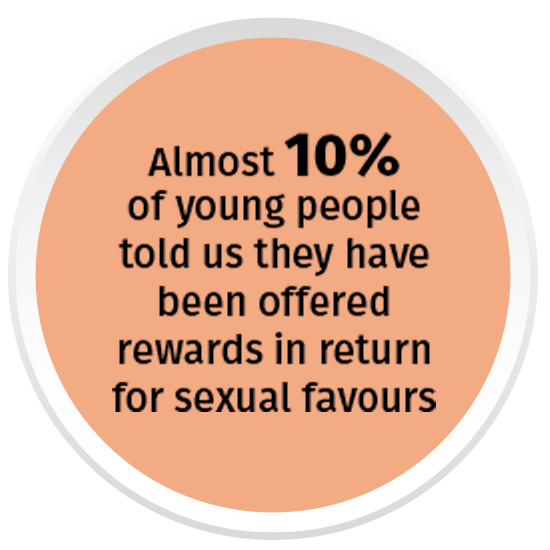
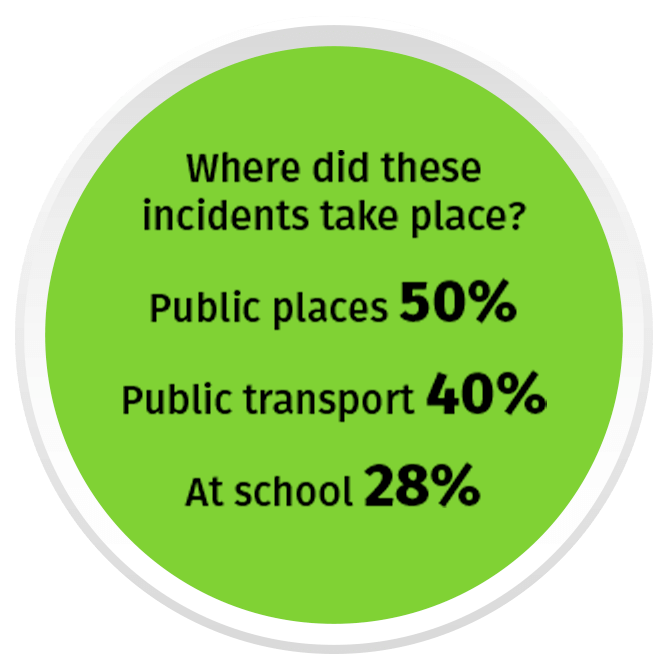
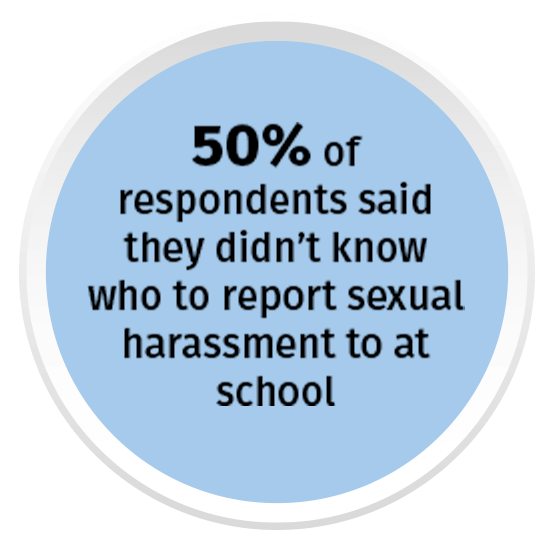
You're not alone when it comes to sexual harassment, the issues people may face reporting it or even identifying it. This year (2025) we spoke to young people about their experiences of sexual harassment and learned how they would like to improve community safety.
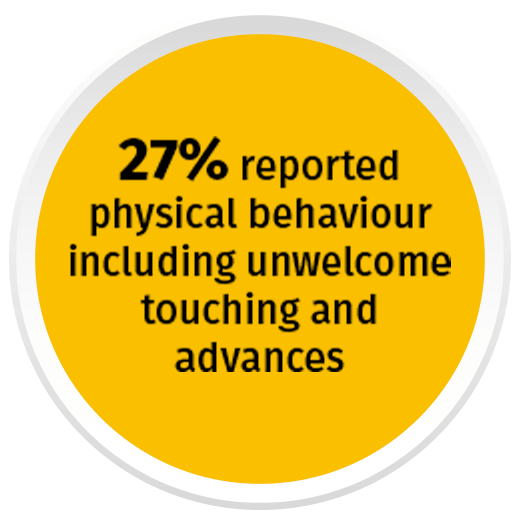
What did we experience over the last 12 months?
Victim blaming
"I've seen and experienced many of these things and whenever I or somebody told the teacher about it, they haven't done anything at all. Both of the students, the predator and the victim, face the same consequence despite one not doing anything at all."
Disregard
"There is too much focus on how not to expel/suspend the perpetrator and not enough focus on the victim. Schools are so desperate not to remove a person from a school that they ignore the victim."
Lack of meaningful action at school
"They don't really do much, only show us presentations"
Homophobia
"Sexual degrading comments I have received are ALL of homophobic nature, there should be zero tolerance policies for homophobia and education around homosexual sex as well as heterosexual sex."
What do we think should happen to make things safer for us?
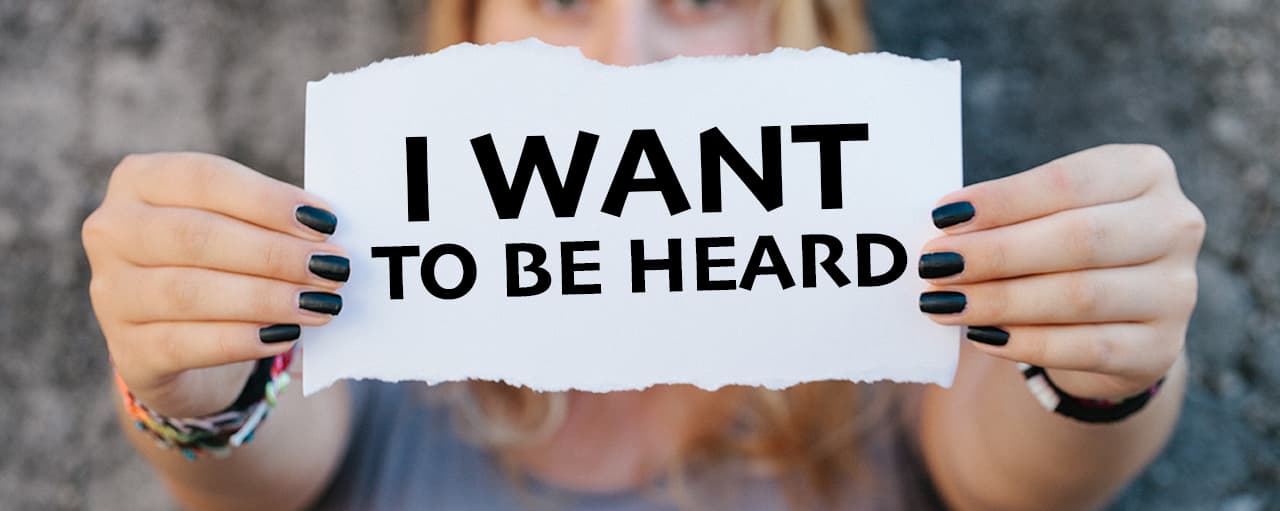
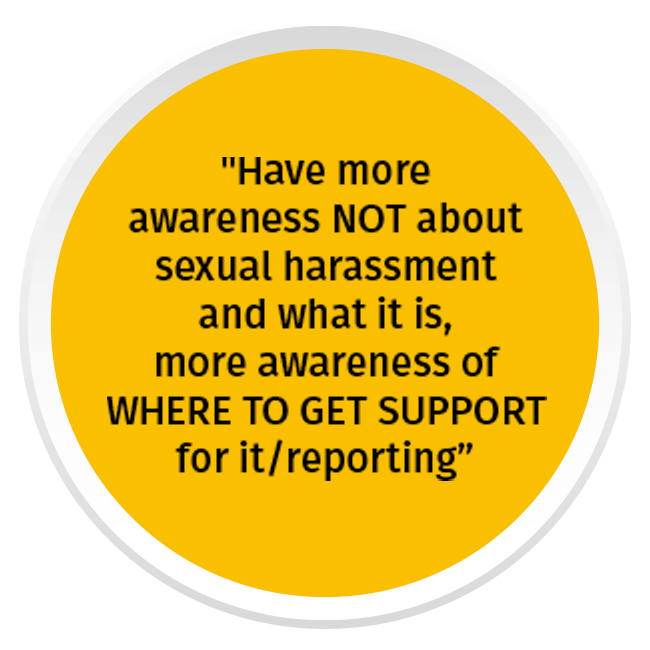
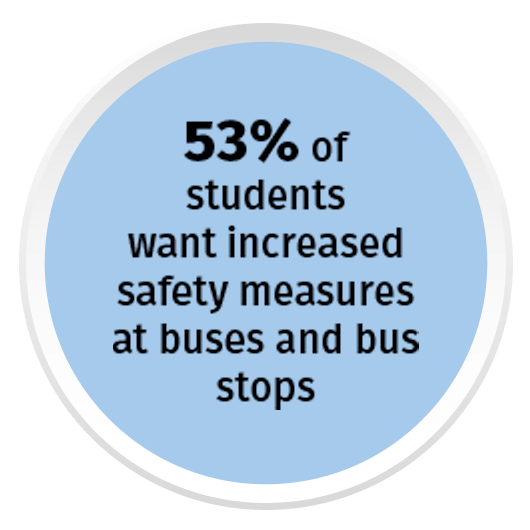
"More safety measures and rules especially in public transport, like buses."
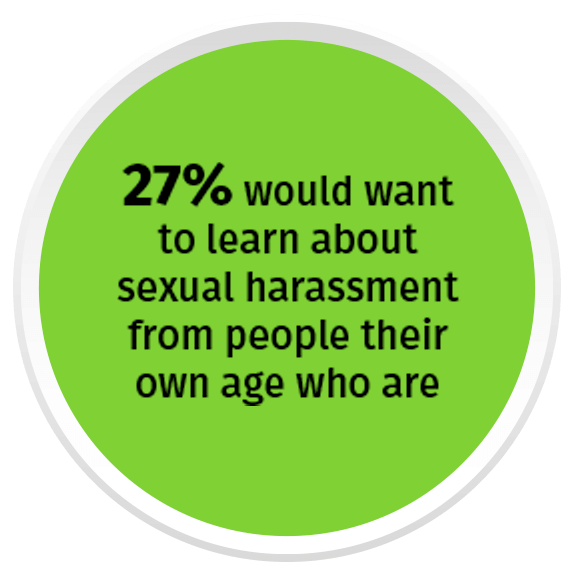
Students would prefer learning about it from people who are trained on the topic - including other students.
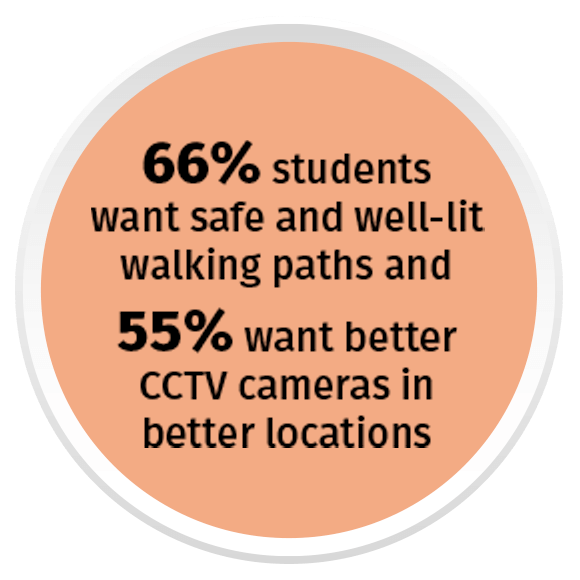
55% want better CCTV cameras in better locations.
What is sexual harassment?
Sexual harassment can happen to women, men, and people of any gender identity or sexual orientation. It can be carried out by anyone of the same sex, a different sex or anyone of any gender identity. Sexual harassment can be carried out by strangers, people you know or people you are in a relationship with.
Sexual harassment can be a one-off incident or an ongoing pattern of behaviour. It describes words or behaviours which are intended to make someone feel upset, scared, humiliated or offended.
What does sexual harassment look like in real life:
- Someone making sexually degrading comments or gestures about someone's body, clothing or appearance
- Your body being stared or leered at
- Telling sexually offensive jokes about someone's sexual activity, sexual orientation or gender
- Unwelcome sexual advances and touching
- Someone showing or sending you pornographic pictures or videos
- Asking questions about someone's sex life
- Offers of rewards in return for sexual favours
- Sharing nudes or showing nudes to your friends
- Sexual assault or rape
Social Media
We know that the internet and social media can normalise sexual harassment and abuse towards girls and young women. So how can young men and boys be affected by social media? And what can be done to keep safe?
You may find that you keep seeing videos on social media that connect masculinity with ideas of dominance, physical strength and sexual conquests. These videos and influencers can make you feel like you are a part of a community and that behaviours connected with sexual harassment are important ways of proving you are a man.
These ideas can be harmful to the girls and women around you but they can also be harmful to you. Being told that the only way to be a man is through strength and aggression can lead to you feeling pressured to behave in a way that you might not want to, this messaging can also negatively impact your mental health and self-worth.
What can you do:
Having male role models can be empowering, but think about the kinds of messages these role models give you, do they make you feel better or worse about yourself? Do they help you connect with people or not?
Have a listen to this podcast on masculinity and what it means to be a man.

What can you do to tackle Sexual Harassment?
- Don't feel pressured to laugh along to sexist conversations or 'banter'
- Have A Word, Call out bad language and sexist behaviour among your friends. Take the challenge with the Mayor of London's 'say Maaate to a mate' interactive video
- If you are worried about somebody being sexually harassed and not sure what to do – don't remain silent, speak to your head of year/student services for advice
- Take part in a White Ribbon Walk to show solidarity with women and girls:
- Events to tackle VAWG in Wandsworth – Wandsworth Borough Council
- Events and training to tackle VAWG in Richmond – London Borough of Richmond upon Thames
- White Ribbon Day and 16 Days of Activism in Merton
- Ask your school/college/university to #StepUp and become a White Ribbon supporter organisation.
What can I do to support?
Go to your safeguarding lead at school and ask what safety measures are in place or speak to your school council.
Ask your school to take action by:
- Making it extremely clear to students who to go to for guidance and support.
- Sign your school up to become a White Ribbon supporter.
- Introduce a peer-to-peer mentoring programme.
- Look at creating a system for safer transport on buses and bus stops.
- Train student mentors in sexual harassment.
- Get your school to work with parents to talk to their children about sexual harassment.
Getting Help
If you've been sexually harassed or assaulted it's important to remember that it was not your fault. Sexual violence is a crime, no matter who commits it or where it happens.

NSPCC – Child Protection Helpline
Helpline for anyone concerned a child is at risk.
The helpline is free, anonymous and 24/7.
Call: 0808 800 5000
Email: help@nspcc.org.uk
Visit: www.nspcc.org.uk

Childline (for children and young people up to 18 years old)
You can contact Childline about anything. Whatever your worry, it’s better out than in. They will support you and help you find ways to cope. Childline is open 24 hours a day over Christmas and New Year, so you can contact them any time.
Call: 0800 1111
Visit: www.childline.org.uk
Report an incident to the Police on 101 (non-emergency). If it's an emergency, please call 999.

Women & Girls Network
Live Chat: One to one Live Chat text service Monday to Thursday 10am – 4pm
Visit: www.wgn.org.uk/our-services/advice-and-helplines/web-chat
Helpline: Free and confidential emotional support from a specialist helpline team.
Tel: 0808 801 0770
Visit: www.wgn.org.uk/our-services/advice-and-helplines/sexual-violence-helpline